When sourcing athletic facilities, municipality buyers, sports academy directors, and commercial venue operators face a primary technical question: “How do hot-dip galvanized steel frames and PE-coated netting perform under continuous outdoor exposure and heavy ball impact, and what material grades guarantee multi-year durability?”
Outdoor sports enclosures endure severe mechanical stress from high-velocity soccer ball impacts, as well as atmospheric corrosion, UV degradation, and seasonal thermal cycling. Specifying sub-standard steel coatings or light netting leads to premature frame rusting, joint failure, and net tearing within months of installation.
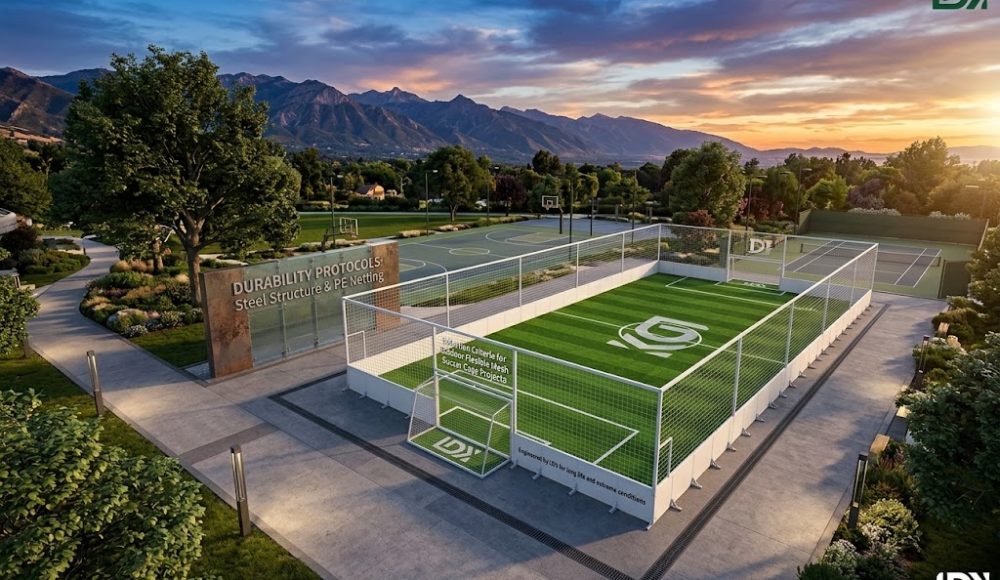
Selecting heavy-duty structural steel posts, stainless steel hardware, and UV-stabilized, high-density polyethylene (PE) netting protects venue investments and ensures player safety. This engineering guide outlines selection criteria, impact absorption mechanics, and procurement checklists for evaluating a commercial flexible mesh soccer cage.
1. Structural Engineering: How Steel Specifications Determine Frame Longevity
The structural integrity of an outdoor court depends on its primary support columns, perimeter frame rails, and assembly hardware.
+-----------------------------------------------------------------------------------------+
|                  Structural Frame & Fastener Material Specifications                    |
+---------------------+-------------------------------------------------------------------+
| Structural Component| Material Standard & Corrosion Protection Profile                  |
+---------------------+-------------------------------------------------------------------+
| Primary Posts       | High-grade round steel pipe posts with heavy galvanization.       |
| Protective Coating  | Hot-dip galvanized coating (≥ 85 μm thickness) + thermoset powder.|
| Assembly Fasteners  | 304/316 Stainless steel bolts, washers, and anti-vibration nuts.  |
| Ground Anchoring    | Heavy-duty base flange plates for concrete surface anchoring.     |
+---------------------+-------------------------------------------------------------------+
Corrosion Protection and Fastener Integrity
Standard steel tubing without internal and external galvanization corrodes rapidly when exposed to rain, ground moisture, and coastal air. LDK utilizes high-grade round steel pipe posts protected by hot-dip galvanization (≥ 85μm coating thickness) and thermoset outdoor powder coating to block moisture ingress.
Furthermore, dynamic vibration from continuous ball impact loosens standard plated hardware, causing rust bleeding at joint connection points. Utilizing high-grade stainless steel screws and anti-vibration lock nuts prevents connection point rusting, maintaining frame stability during intensive gameplay.
2. PE Netting Physics: Impact Absorption and UV Stabilization
Soccer ball impacts generate significantly higher mechanical energy than lighter sports balls. Selecting the correct netting gauge, weave structure, and mesh dimensions is essential to prevent seam tearing.
1. Material Grade and Knotted Weave Mechanics
For reliable ball containment, netting must meet minimum density standards—such as #42 polyester or #36 knotted high-density polyethylene (PE) thread. Knotted netting structures distribute localized kinetic energy across the entire net matrix, whereas knotless nets concentrate load directly on strand intersection points, leading to seam splitting.
2. Double-Layer High-Impact Zone Reinforcement
The goal perimeter and end-zone regions behind goal frames receive over 70% of maximum-velocity impacts. Installing a secondary, double-layer net barrier behind both goal structures absorbs high-energy shots, extending total system service life by 60% to 80%.
3. UV-Stabilized Polymer Coating
Unprotected synthetic polymers degrade rapidly under solar ultraviolet radiation. LDK imported PE-coated netting incorporates UV-stabilized chemical additives directly into the polymer matrix during extrusion. This prevents embrittlement, color fading, and tensile strength loss during extended summer deployments.
4. Mesh Size for Ball Retention and Visibility
A 1-1/8 inch (≈ 29 mm) square mesh pattern reliably stops high-speed soccer balls while maintaining clear sightlines for spectators and unimpeded cross-ventilation across the field.
3. Material Comparison: Industrial Mesh vs. Lightweight Consumer Netting
Evaluating material metrics highlights why commercial sports facilities specify industrial-grade mesh profiles:
| Engineering & Material Metric | Commercial Flexible Mesh Soccer Cage (LDK) | Standard Consumer / Retail Netting |
| Structural Frame Pipe Profile | High-grade round steel pipe (Galvanized ≥ 85μm) | Thin-walled mild steel or un-galvanized pipe |
| Netting Fiber Composition | Imported UV-stabilized PE-coated knotted mesh | Light uncoated nylon or thin PE filament |
| Connection Hardware | 304/316 Stainless steel screws & locking hardware | Standard zinc-plated carbon steel bolts |
| High-Impact Goal Zones | Double-layer net reinforcement configuration | Single-layer uniform netting throughout |
| Target Field Layout | Standard 50 * 20 m or custom commercial specs | Compact temporary backyard pop-up setups |
4. Technical Inspection Checklist for Buyers and Facility Managers
When accepting, purchasing, or leasing an outdoor flexible mesh soccer cage, procurement teams should verify structural compliance using this four-step inspection framework:
- Verify Netting Material and Thread Gauge: Confirm that the primary perimeter netting utilizes #36 knotted PE or higher with integrated UV-inhibitor coatings.
- Inspect Goal End-Zone Netting: Ensure that high-impact areas behind both goal frames include secondary double-layer net panels to absorb high-velocity shots.
- Audit Fasteners and Connection Hardware: Visually inspect all post-to-frame connection points to ensure stainless steel screws and anti-vibration washers are installed without surface plating defects.
- Inspect Galvanization and Powder Coating Uniformity: Check primary round steel support columns for uniform zinc coverage, verifying weld seams are fully sealed against moisture penetration.
Technical Summary
Ensuring multi-year performance in an outdoor flexible mesh soccer cage requires balancing structural frame rigidity with dynamic net energy absorption. Specifying heavy-duty round steel pipe posts with ≥ 85μm hot-dip galvanization, stainless steel hardware, and imported UV-stabilized PE-coated knotted netting delivers optimal safety, player comfort, and low long-term maintenance costs. LDK designs, manufactures, and supplies custom flexible mesh soccer cages, standard 50 * 20 m pitches, and professional sports enclosure systems for clubs, academies, and resorts worldwide.