A mini soccer cage can cost approximately US$4,000–$15,000 for a compact 1v1 or 2v2 installation, while a larger training cage may require US$15,000–$45,000. A complete commercial 5-a-side enclosed pitch can cost US$45,000–$140,000 or more.
The final budget depends on the court size, fence and rebound-board materials, playing surface, ground conditions, lighting, international shipping and local installation costs. A basic factory price normally covers only the soccer cage equipment—it should not be confused with the total cost of a ready-to-play facility.
This guide explains the main cost items, suitable applications and important decisions to make before requesting a quotation.
Mini Soccer Cage Cost at a Glance
| Soccer Cage Type | Typical Application | Indicative Turnkey Budget |
|---|---|---|
| Compact 5–6 m Panna cage | 1v1 games, events, schools and shopping malls | US$4,000–$15,000 |
| Small training cage | Youth academies, clubs and community centers | US$15,000–$45,000 |
| Commercial 5-a-side cage | Rental venues, sports parks and football centers | US$45,000–$140,000+ |
| Premium glass soccer cage | High-end clubs, rooftops and spectator-focused venues | Quoted according to size and configuration |
These are preliminary 2026 planning ranges in US dollars, not a formal quotation. Land purchase, building construction and major utility works are not included.
What Is a Mini Soccer Cage?
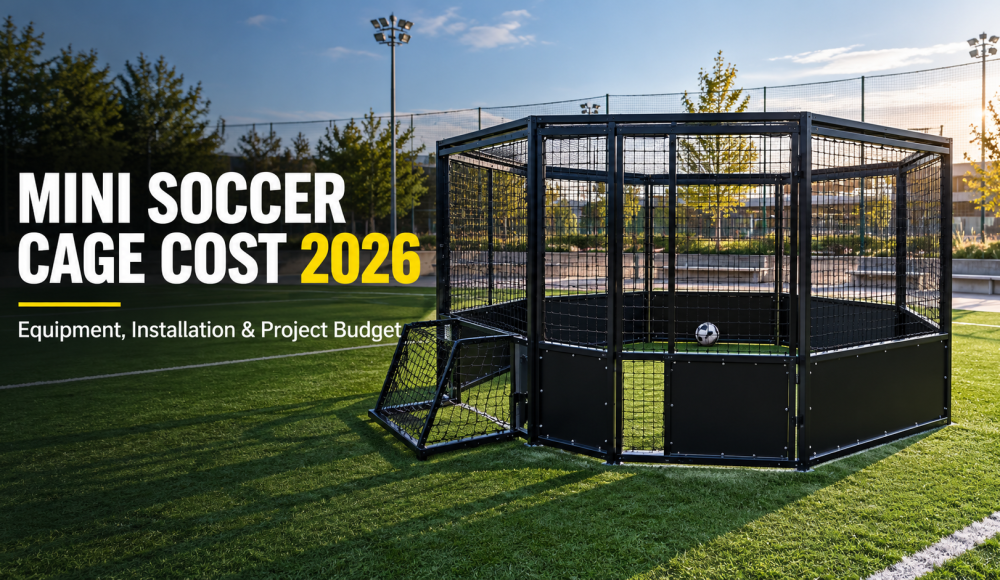
A mini soccer cage is a compact playing area surrounded by rebound boards, mesh fencing, soft netting or safety glass. The enclosure keeps the ball in play, reduces interruptions and creates a fast, high-participation football experience.
Depending on its size, a soccer cage can support 1v1 Panna games, youth skills training, small-sided matches, branded activations or commercial court rental. Modular systems can also be customized for indoor or outdoor sites.
To compare available systems, visit our soccer cage product range.
What Is Included in the Construction Cost?
1. Soccer Cage Structure
The enclosure is normally the largest equipment cost. It may include steel or aluminum posts, impact-resistant rebound boards, perimeter mesh, soft containment netting, entrance doors, fasteners and integrated goals.
Steel-panel and mesh systems are usually the most cost-effective. Composite rebound boards improve appearance, impact resistance and ball rebound. Tempered-glass walls provide better visibility and a premium commercial look, but increase material, packaging, shipping and installation costs.
2. Ground Preparation and Base Construction
A stable and level base is essential for safe installation. Depending on the existing site, the work may include excavation, grading, drainage, compacted aggregate, concrete or asphalt construction and anchor foundations.
An existing flat concrete floor can significantly reduce the project budget. Soft soil, poor drainage, rooftop structural requirements or major level differences will increase both engineering and construction costs.
3. Playing Surface
Common flooring options include artificial turf, PVC sports flooring and interlocking PP tiles. Artificial turf is popular for outdoor football cages because it provides familiar ball behavior and all-weather usability. Indoor event cages may use modular tiles or even an existing venue floor.
The surface budget depends on material quality, pile height, shock pad, infill, line marking and installation labor. Explore our soccer cage artificial turf options.
4. Lighting and Electrical Work
Lighting is optional for a daytime event cage but important for commercial venues that operate in the evening. The total cost depends on the number and wattage of LED floodlights, pole height, electrical cabinets, cabling and local electrical installation requirements.
For a larger enclosed facility, see the LDK soccer cage with integrated LED lighting.
5. Freight, Import Charges and Installation
International buyers should budget separately for export packaging, ocean or land freight, port charges, customs duties, inland delivery and local assembly. Freight varies considerably by destination and shipment volume, so an equipment quotation marked FOB is not the final landed cost.
Installation costs are influenced by the cage size, number of workers, lifting equipment, anchor method and whether the site is already prepared. Request both an equipment list and installation drawings before comparing suppliers.
Example Budget for a Compact 5–6 m Soccer Cage
| Cost Item | Indicative Range |
|---|---|
| Cage structure, boards, nets, door and goal | US$1,700–$6,000 |
| Ground preparation or concrete base | US$500–$3,000 |
| Artificial turf or modular sports flooring | US$300–$1,500 |
| Freight, local delivery and import-related costs | US$800–$4,000 |
| Local assembly and installation | US$500–$2,500 |
| Indicative ready-to-use total | Approximately US$4,000–$15,000 |
The ranges overlap because location matters. A cage installed on an existing indoor floor near the supplier may stay near the lower end. A customized outdoor project requiring new foundations and long-distance shipping will be closer to the upper end.
What Affects the Final Price?
- Size and playing format: A 5–6 m Panna cage uses much less steel, flooring and foundation work than a 5-a-side pitch.
- Fence material: Soft netting and wire mesh are economical; composite panels and tempered glass cost more.
- Indoor or outdoor installation: Outdoor structures require stronger corrosion protection, drainage and wind-load consideration.
- Permanent or portable design: A permanent anchored cage offers long-term stability, while a portable system may require modular frames and counterweights.
- Surface choice: Artificial turf, shock pads and premium sports tiles have different costs and maintenance requirements.
- Branding: Custom colors, printed panels, logos and sponsor graphics add value for events but also affect production cost.
- Lighting and accessories: LED systems, scoreboards, benches and spectator protection should be budgeted separately.
- Destination country: Freight, duties, certification and local labor rates can materially change the landed project cost.
Where Can a Mini Soccer Cage Be Used?
Schools and Youth Football Academies
A compact cage allows coaches to organize 1v1 drills, ball-control exercises and small-sided games. Because the ball remains inside the enclosure, players receive more touches and spend less time retrieving it.
Community Parks and Urban Spaces
Mini cages make productive use of small or irregular sites where a traditional football field will not fit. Durable steel boards and weather-resistant netting are appropriate for high-frequency public use.
Shopping Malls and Commercial Centers
A visually attractive cage can become a paid entertainment facility or a traffic-generating activity. Portable modular systems are especially useful when the venue may change its layout.
Sports Clubs and Commercial Rental Venues
Operators can use compact cages for skills sessions, coaching programs, children’s parties and short-format competitions. Larger 5-a-side systems can support hourly bookings, leagues and corporate events.
Brand Activations and Football Events
A Panna cage creates an easy-to-understand interactive attraction for tournaments, fan zones, product launches and sponsor campaigns. Panel colors and logos can be customized to match an event identity.
Hotels, Resorts and Residential Developments
Where space is limited, a mini soccer cage provides a contained recreational feature without requiring a full-size football pitch.
Recommended Configuration for a Compact Project
For a practical 1v1 or 2v2 installation, a typical configuration may include:
- Field diameter: 5–6 m or customized
- High-grade steel frame
- Approximately 80 cm lower steel rebound-board section
- Approximately 20 cm upper steel board section
- 4.0 mm soft net with 100 × 100 mm mesh
- Total enclosure height: approximately 2.2 m
- Integrated entrance door and soccer goal
- Optional artificial turf, PVC or PP sports flooring
View the LDK modular mini soccer cage for product details and customization options.
How Is a Mini Soccer Cage Built?
- Site assessment: Confirm available dimensions, access, drainage, utilities and indoor or outdoor conditions.
- Concept and layout: Choose the playing format, cage shape, entrance position, surface and accessories.
- Foundation preparation: Level the site and construct the required base or anchor points.
- Structure installation: Assemble posts, rebound boards, fencing, door and goals according to the drawings.
- Net and flooring installation: Tension the containment net correctly and install the selected playing surface.
- Final safety inspection: Check anchors, exposed edges, bolt covers, net tension, door operation and clearances.
Local planning permission, structural calculations and electrical approvals may be required. Requirements vary by country and site, especially for public parks, rooftops and permanently illuminated outdoor facilities.
How to Reduce Construction Costs Without Reducing Safety
- Use an existing level concrete or asphalt surface when it is structurally suitable.
- Choose a standard modular size instead of unnecessary custom fabrication.
- Select mesh or steel-panel walls when premium glass visibility is not required.
- Confirm packaging dimensions early so the shipment uses container space efficiently.
- Purchase the cage, flooring and accessories from one supplier to reduce compatibility problems.
- Prepare the foundation locally while the equipment is being manufactured.
- Compare suppliers using the same scope: materials, surface treatment, netting, goals, doors, packaging and technical support.
Can a Soccer Cage Generate Revenue?
Yes. Commercial operators can generate revenue through hourly rental, coaching sessions, youth programs, tournaments, birthday events and sponsorship. However, revenue depends on local demand, operating hours, pricing and site costs.
For example, a cage rented for US$25 per hour for six paid hours per day over 300 operating days would generate US$45,000 in annual gross booking revenue:
US$25 × 6 hours × 300 days = US$45,000
This is revenue before rent, staffing, utilities, maintenance, marketing, taxes and financing. Investors should calculate conservative and expected utilization scenarios before committing to a project.
How to Request an Accurate Soccer Cage Quotation
Send the following information to the manufacturer:
- Project country and delivery city
- Available site dimensions and photographs
- Indoor or outdoor location
- Expected number and age of players
- Permanent or portable installation
- Preferred wall material and flooring
- Lighting, branding and accessory requirements
- Existing ground condition
- Target opening date
With this information, a supplier can recommend the correct structure and separate the equipment price, freight and local construction scope.
Build a Custom Mini Soccer Cage with LDK
LDK designs and manufactures modular soccer cage systems for schools, clubs, community parks, commercial venues and sports events. Available options include compact Panna cages, mesh enclosures, composite rebound-board systems, portable courts and premium glass soccer cages.
Each project can be customized according to the available area, playing format, climate, budget and branding requirements.
Planning a soccer cage project? Contact LDK and send us your project location, site dimensions and preferred configuration for a customized design and quotation.
Frequently Asked Questions
How much does a small soccer cage cost?
A compact 5–6 m soccer cage may require a total budget of approximately US$4,000–$15,000 after including the structure, basic site work, surface, freight and installation. The cage equipment alone costs less than the complete ready-to-use project.
What is the cheapest soccer cage material?
Steel frames combined with mesh fencing or soft netting are generally more economical than composite-board or tempered-glass systems. The correct option should still be selected according to impact, weather and public-use requirements.
Can a soccer cage be installed indoors?
Yes. Indoor cages are suitable for sports centers, schools, warehouses, malls and event venues. Existing flooring and overhead clearances must be checked before installation.
Can the cage size and color be customized?
Yes. The dimensions, shape, frame color, panels, goals, flooring and branding can be adapted to the project.
Does a mini soccer cage need a concrete foundation?
Permanent outdoor systems often require a concrete base or engineered anchor foundations. Some portable modular cages can be installed on a suitable existing surface using freestanding frames or counterweights.
How long does installation take?
A compact cage can often be assembled within several days after the base is ready. Larger courts, lighting systems and complex groundworks require more time. The final schedule should be confirmed from the approved drawings and local site conditions.