Choosing the right squash court wood flooring is a critical decision for commercial squash clubs, sports centers, schools, hotels, and indoor sports facilities. A professional squash floor does not only affect the playing experience but also directly impacts long-term operating costs, maintenance frequency, and the overall value of the facility.
Many investors focus mainly on the initial construction budget when selecting a flooring solution. However, choosing a low-quality or unsuitable flooring system may result in higher costs in the future, including frequent repairs, surface damage, poor playing performance, and premature replacement.
For commercial squash clubs, the floor is one of the most frequently used parts of the facility. Every day, the surface must withstand intensive player movement, sudden stops, rapid direction changes, sports shoe friction, and continuous foot traffic.
A poor flooring choice may lead to problems such as:
- Insufficient shock absorption and increased player fatigue
- Surface wear caused by high-frequency usage
- Unstable ball rebound affecting playing experience
- Wood deformation caused by moisture or temperature changes
- Higher maintenance and replacement costs
Therefore, selecting the right squash court flooring system requires more than choosing a wood material. The complete flooring structure, shock absorption performance, installation method, durability, and future maintenance requirements should all be considered before making a decision.
A professional indoor squash flooring solution should provide:
- Excellent shock absorption to protect players’ joints
- Stable elasticity and ball response
- High wear resistance for commercial operation
- Reliable performance under different indoor environments
- Easy maintenance and long service life
This guide explains how to choose the best squash court wood flooring, compare different wood materials, understand professional squash flooring systems, and select the right solution for long-term commercial operation.
What Characteristics Should Professional Squash Court Flooring Have?
A professional sports floor is not simply a wooden surface. It is a complete engineered flooring system designed to balance player safety, sports performance, and durability.
For squash courts, the flooring system needs to support fast movements, frequent impacts, and repeated changes in direction. The right flooring solution should provide the following essential characteristics.

1. Excellent Shock Absorption Performance
Squash players frequently perform high-intensity movements, including acceleration, sudden stopping, jumping, and rapid turning.
A professional squash flooring system should absorb impact forces and reduce stress on players’ knees, ankles, and joints.
A properly designed sprung flooring structure allows controlled vertical movement while maintaining stability, creating a safer and more comfortable playing environment.
2. Stable Ball Rebound and Playing Performance
The flooring surface directly influences the quality of a squash game.
A professional squash court floor should provide:
- Consistent ball rebound
- Uniform surface hardness
- Predictable player movement
- Stable playing speed
An unsuitable flooring system may create inconsistent bounce performance and negatively affect the player’s experience.
3. High Durability for Commercial Squash Clubs
Commercial squash facilities often operate for many hours every day. Unlike residential sports spaces, club floors must handle intensive usage over many years.
A durable squash court flooring solution should resist:
- Frequent player traffic
- Sports shoe friction
- Daily cleaning
- Long-term intensive operation
High-quality hardwood flooring can usually be refinished and maintained, extending the service life of the court and reducing long-term replacement costs.
4. Moisture and Environmental Stability
Wood flooring performance can be affected by humidity, temperature changes, and improper installation.
A professional indoor squash flooring system should include proper structural design and moisture protection to prevent:
- Wood expansion
- Surface deformation
- Cracking
- Joint problems
Common Wood Flooring Materials Used in Sports Facilities

The sports flooring market includes several types of wood materials, including hardwood flooring, maple flooring, oak flooring, and engineered wood flooring.
However, different sports have different performance requirements. A flooring material that works well for basketball or badminton may not always be the best solution for a professional squash court.
The most important consideration is not only the wood species but also the complete flooring system design, including the support structure and shock absorption performance.
Hardwood Flooring for Sports Applications
Hardwood flooring is one of the most widely used solutions for professional sports facilities because of its natural strength, elasticity, durability, and premium appearance.
Common hardwood materials include:
- Maple
- Oak
- Beech
- Ash
The main advantages of hardwood sports flooring include:
- Strong load-bearing capacity
- Natural elasticity
- Excellent wear resistance
- Professional appearance
- Long service life
However, selecting hardwood alone does not guarantee professional squash performance. A complete squash flooring system requires the correct combination of surface material, supporting structure, and shock absorption technology.
Maple Wood Flooring: A Popular Choice for Sports Courts
Maple flooring is one of the most recognized sports flooring materials worldwide. Due to its excellent balance between hardness, strength, and elasticity, maple is widely used in professional sports facilities.
Common applications include:
- Basketball courts
- Volleyball courts
- Badminton courts
- Indoor multi-purpose sports halls
Advantages of Maple Sports Flooring
Excellent Durability
Maple has a dense wood structure that provides strong resistance to wear, making it suitable for sports environments with frequent player activity.
Good Elasticity
The natural properties of maple provide a comfortable playing surface while supporting athlete movement and reducing impact.
Professional Appearance
The clean color and smooth surface of maple create a premium appearance commonly seen in professional sports venues.
Is Maple Flooring Suitable for Squash Courts?

Maple flooring is widely used in sports facilities, but professional squash courts require more than a high-quality wood surface.
Compared with basketball or badminton courts, squash courts have unique requirements:
- Faster movement patterns
- More frequent direction changes
- Specific ball rebound requirements
- Controlled flexibility
Therefore, the performance of a squash court wood flooring solution depends on the complete flooring system rather than only the wood species.
For professional squash facilities, hardwood surfaces combined with a suitable sprung support structure can provide the required balance between player comfort, durability, and performance.
Oak and Other Hardwood Flooring Options
Oak flooring is another commonly used hardwood material in sports and commercial facilities.
Compared with maple, oak provides:
- Excellent structural stability
- High durability
- Natural appearance
Oak flooring is commonly used for:
- Multi-purpose sports halls
- Fitness centers
- Recreation facilities
- Indoor activity spaces
For professional squash applications, oak flooring should be combined with an appropriate support system to achieve the required shock absorption and playing performance.
Which Wood Flooring Is Suitable for Different Sports?
Different sports have different requirements for flooring performance. The ideal sports floor depends on factors such as movement patterns, impact level, player safety, and usage frequency.
Choosing the wrong flooring material may affect sports performance and increase long-term maintenance costs.
| Sports Application | Recommended Flooring Solution | Main Requirements |
|---|---|---|
| Squash Court | Professional sprung hardwood squash flooring system | Shock absorption, stable rebound, durability |
| Basketball Court | Maple sports wood flooring | Impact resistance, elasticity, player protection |
| Badminton Court | Maple or engineered sports flooring | Fast movement response, comfort, slip resistance |
| Volleyball Court | Sprung hardwood flooring | Shock absorption and impact protection |
| Indoor Sports Hall | Multi-purpose engineered wood flooring | Flexible usage and durability |
| Fitness Center | Hardwood or synthetic sports flooring | Wear resistance and easy maintenance |
For squash facilities, the most important factor is not simply selecting a certain type of wood. A professional squash court flooring system requires a complete structure that combines the surface material, supporting layer, and shock absorption design.
Why Does a Squash Court Need a Professional Flooring System?

A squash court has unique playing characteristics compared with other indoor sports. Players move continuously around the court with frequent acceleration, stopping, and lateral movement.
Therefore, a professional squash floor needs to achieve a balance between:
- Flexibility for player comfort
- Stability for accurate movement
- Hardness for consistent ball response
- Durability for commercial operation
A simple wooden surface installed directly on concrete cannot provide the performance required for a professional squash facility.
A complete squash flooring system normally includes:
- Hardwood playing surface
- Supporting structure
- Shock absorption components
- Subfloor system
- Moisture protection layer
- Professional installation and finishing
Professional Squash Court Flooring Systems
LDK provides professional squash court flooring solutions designed for different project requirements, including permanent facilities and flexible competition venues.
The main solutions include:
- Fixed Squash Court Flooring System
- Removable Competition Sports Wood Flooring System
Both solutions are designed for commercial squash clubs, sports centers, schools, hotels, and professional indoor sports facilities.

Fixed Squash Court Flooring System
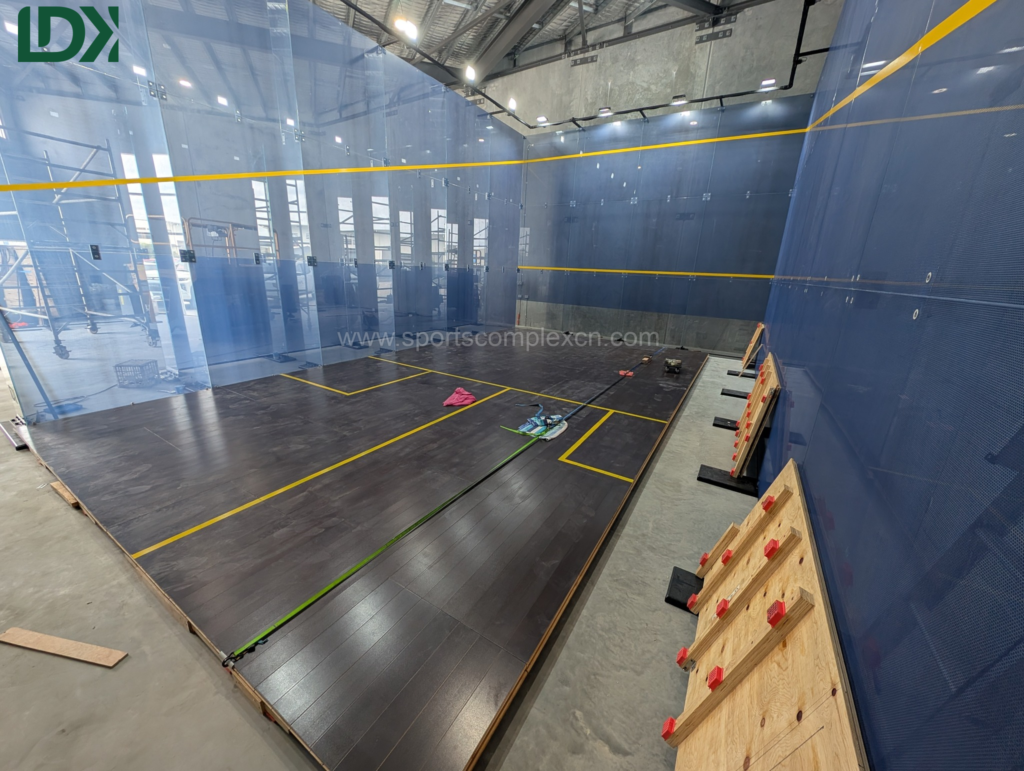
A fixed squash flooring system is a permanent flooring solution designed for facilities that require long-term operation and stable performance.
This solution is commonly selected by commercial squash clubs and sports facilities that plan to operate courts continuously for many years.
Structure of Fixed Squash Flooring System
A professional fixed squash court flooring system usually consists of multiple layers:
- Hardwood surface layer
- Supporting wooden structure
- Shock absorption layer
- Subfloor support system
- Moisture protection system
- Surface coating and court marking
Advantages of Fixed Squash Flooring System
1. Excellent Structural Stability
Because the system is permanently installed, it provides strong stability and consistent performance during daily operation.
This makes it suitable for high-frequency commercial squash facilities where reliability is essential.
2. Professional Playing Experience
A properly designed fixed flooring system provides:
- Reliable shock absorption
- Stable foot movement response
- Consistent ball rebound
- Comfortable playing experience
3. Suitable Applications
Fixed squash flooring systems are recommended for:
- Commercial squash clubs
- Sports complexes
- Hotels and resorts
- Schools and universities
- Permanent indoor squash facilities
Removable Competition Sports Wood Flooring System
For venues requiring flexibility, a removable competition sports wood flooring system provides an efficient alternative.
Unlike permanent flooring, this system can be installed, removed, and reused according to different project requirements.
Advantages of Removable Squash Flooring System
1. Flexible Installation
The removable structure allows existing halls or facilities to be converted into professional squash venues without permanent changes to the building structure.
2. Ideal for Competition and Multi-Purpose Venues
This solution is suitable for:
- Professional squash tournaments
- Temporary competition venues
- Multi-purpose sports halls
- Event facilities
3. Reusable and Relocatable
When venue requirements change, the flooring system can be removed and installed in another location, providing greater flexibility and investment value.
Fixed Squash Flooring System vs Removable Competition Flooring System
| Feature | Fixed Flooring System | Removable Competition Flooring System |
|---|---|---|
| Installation Method | Permanent installation | Flexible installation and removal |
| Structural Stability | Excellent | Excellent |
| Relocation | Not possible | Possible |
| Best Application | Permanent squash clubs | Tournaments and multi-purpose venues |
| Maintenance | Regular professional maintenance | Easy replacement and reuse |
| Long-Term Value | Best for fixed investment projects | Best for flexible venue planning |

How Should Commercial Squash Clubs Choose a Flooring Solution?
For commercial squash club owners, choosing flooring is not only a construction decision but also a long-term business investment.
The right flooring solution can influence:
- Player satisfaction
- Customer retention
- Maintenance costs
- Court availability
- Long-term profitability
1. Evaluate Daily Usage Frequency
A squash club operating several hours every day should prioritize durability and long-term performance.
High-frequency facilities should choose flooring systems with:
- Strong wear resistance
- Reliable shock absorption
- Stable performance
- Easy maintenance requirements
2. Consider Customer Experience
For commercial clubs, the quality of the court directly affects customer satisfaction.
A professional indoor squash flooring system helps provide:
- Better player comfort
- Safer movement
- Professional playing conditions
3. Match the Flooring System With Your Business Model
Different sports facilities have different operational goals. Choosing the right squash flooring system should be based on how the venue will be used in the future.
For facilities focusing on long-term commercial operation, a fixed squash flooring system is usually the preferred choice because it provides stable performance and durability.
For venues that need flexible space utilization, tournament hosting, or temporary court installation, a removable competition sports wood flooring system provides better adaptability.
4. Consider Long-Term Operating Costs
When selecting squash court flooring, the initial purchase price should not be the only consideration.
Commercial operators should also evaluate:
- Expected service life
- Maintenance frequency
- Repair requirements
- Future replacement costs
A high-quality squash court flooring system may require a higher initial investment, but it can provide better long-term value through improved durability, lower maintenance costs, and better customer experience.
Squash Court Wood Flooring Maintenance Guide for Commercial Facilities
Proper maintenance is essential for protecting the performance and appearance of a professional squash court wood flooring system.
For commercial squash clubs, regular maintenance can extend flooring lifespan, reduce repair costs, and maintain a high-quality playing environment for customers.
Daily Squash Floor Maintenance
Daily maintenance is the foundation of keeping a squash court floor in good condition.
1. Remove Dust and Surface Particles
Dust, sand, and small particles can increase surface friction and accelerate wear of the wood finish.
Recommended practices:
- Use a soft microfiber mop
- Clean the playing surface regularly
- Remove dirt from player areas
Avoid using rough cleaning tools that may damage the protective coating.
2. Control Moisture Exposure
Wood flooring is sensitive to excessive moisture.
Operators should avoid:
- Water accumulation on the surface
- Wet cleaning methods
- High humidity environments without control
Excess moisture may cause:
- Wood expansion
- Floor deformation
- Joint separation
Weekly and Monthly Inspection
Commercial squash clubs should regularly inspect the flooring condition.
Important inspection areas include:
- Surface scratches
- Worn coating areas
- Loose boards
- Abnormal movement
- Changes in floor response
Early detection allows small problems to be repaired before they develop into larger structural issues.
Professional Periodic Maintenance
Depending on usage frequency, professional maintenance may be required to restore the flooring performance.
Surface Refinishing
Hardwood squash flooring can usually be sanded and refinished after long-term use.
Benefits include:
- Restoring the appearance
- Improving surface protection
- Extending flooring lifespan
- Maintaining professional playing conditions
Structural Inspection
Professional inspection should also check the complete flooring system, including:
- Support structure
- Shock absorption performance
- Subfloor condition
- Moisture protection
Common Squash Court Flooring Problems Caused by Poor Selection
Choosing an unsuitable flooring solution may create long-term problems for squash facility owners.
Common issues include:
1. Insufficient Shock Absorption
A floor without proper structural design may increase impact on players and reduce comfort during extended play.
2. Excessive Surface Wear
Low-quality materials may wear quickly under commercial operating conditions, increasing maintenance requirements.
3. Unstable Playing Performance
Poor flooring design may affect ball rebound consistency and player movement experience.
4. Higher Long-Term Costs
A cheaper initial solution may result in higher total ownership costs because of frequent repairs and early replacement.
How to Reduce Long-Term Squash Flooring Costs
For commercial squash clubs, the most economical flooring solution is not always the lowest-priced option.
A better approach is evaluating the total lifecycle value of the flooring system.
Choose the Correct Flooring System
Selecting between a fixed system and removable competition flooring should depend on:
- Facility type
- Expected usage frequency
- Future expansion plans
- Budget requirements
Invest in Quality Materials and Installation
Professional materials combined with correct installation can reduce:
- Repair frequency
- Surface problems
- Unexpected downtime
Establish a Regular Maintenance Plan
A preventive maintenance program helps protect the flooring investment and ensures consistent court performance.
Why Choose LDK Squash Court Flooring Solutions?
Choosing the right squash court wood flooring requires professional knowledge of materials, flooring structures, installation methods, and long-term maintenance requirements.
LDK provides customized squash court flooring solutions for different commercial and professional applications, including:
- Fixed Squash Court Flooring System
- Removable Competition Sports Wood Flooring System
- Customized indoor squash flooring solutions
With professional sports equipment manufacturing experience and complete project support, LDK helps customers build reliable squash facilities with excellent playing performance and long-term value.
Whether you are developing a new squash club, upgrading an existing sports center, or planning a competition venue, LDK can provide a customized flooring solution based on your project requirements.

Frequently Asked Questions About Squash Court Flooring
What type of flooring is best for a squash court?
Professional squash courts usually use hardwood flooring systems combined with sprung structures to provide shock absorption, stable ball response, and player comfort.
Is maple flooring suitable for squash courts?
Maple is widely used in sports flooring, especially basketball and badminton courts. For squash courts, the complete flooring structure and shock absorption system are more important than the wood material alone.
What is a squash flooring system?
A squash flooring system is a complete sports floor structure that includes the wood surface, supporting system, shock absorption components, and installation design specifically developed for squash performance.
What is the difference between fixed and removable squash flooring?
A fixed squash flooring system is designed for permanent sports facilities, while a removable competition sports wood flooring system provides flexibility for temporary venues and multi-purpose spaces.
How long does squash court wood flooring last?
With proper installation, regular maintenance, and professional care, a high-quality squash wood flooring system can provide many years of reliable performance.
How should commercial squash clubs maintain their flooring?
Commercial clubs should perform regular cleaning, moisture control, surface inspections, and periodic professional maintenance to protect the flooring system and extend service life.
Can squash court flooring be customized for different projects?
Yes. Professional squash flooring systems can be customized according to venue type, installation requirements, performance expectations, and project budget.