Transforming Motorized Roofs from Static Covers into Yield Drivers
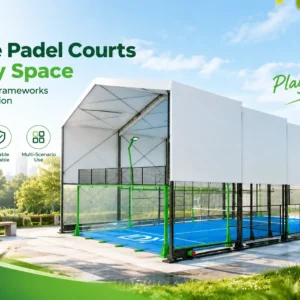
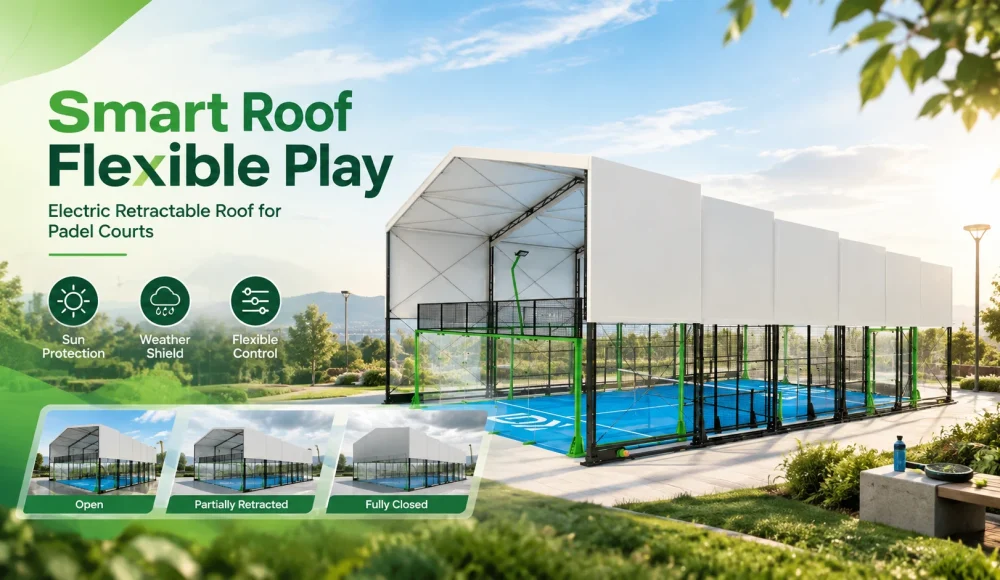
For padel club owners, sports venue managers, and hospitality operators, an electric retractable padel court roof adds flexible, all-weather protection. Unlike fixed canopies, retractable roofs allow operators to control the court environment according to weather conditions. Operators can open the roof for natural sunlight, fresh airflow, and a premium outdoor playing experience. They can also close the roof during sudden rain, intense sunlight, or unfavorable weather conditions.
However, installing a motorized roof does not guarantee effective daily operation. Without clear operating protocols, venue teams may use the system inefficiently or respond too slowly. Keeping the roof open during strong winds can increase structural risks and equipment stress. Keeping it closed during mild weather can reduce outdoor comfort and limit natural ventilation. Operators therefore need clear rules for when to deploy, retract, or adjust the roof. These decisions should consider weather conditions, court usage, player comfort, and structural safety. A defined operating strategy helps venues balance protection, energy efficiency, comfort, and year-round court availability.
Establishing a clear retractable padel court canopy operating protocol ensures structural safety, reduces operating expenses, and maximizes year-round court utilization.
1. Operational Decision Matrix: Environmental Conditions vs. Deployment Protocols
To simplify daily management for on-site staff, the matrix below outlines deployment rules based on local weather variables and operational goals.
| Weather & Climate Variable | Recommended Roof State | Operational & Financial Rationale |
| Gentle Rain to Torrential Downpours | 100% Closed | Fully extends the flame-retardant PVC canopy across galvanized steel tracks to keep court glass and turf completely dry, preventing match cancellations. |
| High Wind Speed ($\ge 40\text{ km/h}$ / $\approx 25\text{ mph}$) | 100% Fully Retracted (Stacked) | Retracting the fabric canopy eliminates wind-sail uplift forces, preventing track distortion, motor strain, and structural frame fatigue. |
| High Heat & Harsh UV (Midday $11:00 – 15:00$) | Partially to Fully Extended | Shields players from direct UV exposure while reducing surface temperature on court turf and surrounding glass panels. |
| Mild / Fair Weather ($18^\circ\text{C} – 24^\circ\text{C}$) | 100% Fully Retracted | Delivers an authentic open-air padel experience, eliminates artificial lighting demands, and leverages natural cross-ventilation. |
| Heavy Snowfall / Sub-Zero Freezing | 100% Retracted or Heated Clear | Prevents structural overload from excessive snow accumulation along roof trusses and protects motor drive assemblies from frozen track resistance. |

2. Technical Q&A: Weather Thresholds, Seasonal Rules, and HVAC Integration
Q: Will Operating or Leaving the Canopy Extended During High Winds Damage the Structure?
Yes. Wind uplift is the primary risk factor for motorized fabric roofs.
When fully extended, a fabric roof acts like a sail. While heavy-duty galvanized steel truss structures are engineered to handle significant static loads, high dynamic wind gusts ($\ge 40\text{ km/h}$) exert severe upward and lateral shear forces along motor drive groups and track guides.
                  [High Wind Force (≥ 40 km/h)]
                                │
                                ▼
  ┌─────────────────────────────┐
  │  Fully Extended Roof Panel = High Wind-Sail Surface Area │
  └──────────────┬──────────────┘
                                │
                                ▼
  ┌─────────────────────────────┐
  │  Excessive Lateral Shear Stress on Tracks & Motor Drives │
  └──────────────┬──────────────┘
                                │
                                ▼
  [Required Protocol: Retract Roof Completely to Neutral Stacking Zone]
- Automated Safety Controls: Modern commercial installations should incorporate automated anemometer (wind sensor) integration. When wind speeds breach preset safety thresholds, the sensor automatically triggers the dual motor groups to retract the fabric into its safe, stacked position.
Q: Does a Retractable Padel Court Roof Need to Be Retracted During Winter Months?
It depends on local snow loads and freezing conditions.
- Light Winter Climates: In regions with mild winters and light rain, keeping the motorized roof closed allows facilities to extend playing hours, protect turf from frost, and maintain comfortable court temperatures using localized radiant heaters.
- Heavy Snow Zones: Snow accumulation imposes extreme dead-weight loads on horizontal fabric spans. In areas prone to heavy snow, operators should keep the roof fully retracted during winter storms to allow snow to fall directly through, preventing fabric sagging and track deformation. Additionally, track heating cables can be installed to clear ice prior to deploying motor drives.
Q: How Does the Retractable Roof Interact with Venue Ventilation and Climate Systems?
An electric retractable padel court roof serves as the primary component of a passive climate control system:
[Hot / Humid Conditions]  ──► Partial Roof Deployment + Lowered Glass Vents ──► Stacks Heat & Drives Passive Chimney Effect
[Cold / Rainy Conditions] ──► Full Roof Extension + Perimeter Enclosure   ──► Traps Radiant Heating & Eliminates Humidity
- Passive Chimney Effect: Deploying the roof cover to 75–80% extension while opening lower side enclosure curtains creates a natural draft. Rising thermal energy escapes through the open gap, drawing cooler air across the court surface and cutting air-circulation energy costs.
- HVAC Cost Reduction: During peak summer, shading the court cuts solar heat gain on the synthetic turf and glass walls, reducing the cooling load on supplemental HVAC systems by up to 30%. In spring and autumn, retracting the roof eliminates the need for mechanical ventilation.
3. Engineering Best Practices for Retractable Padel Canopy Maintenance
To guarantee smooth motor drive operation and long-term track alignment across thousands of opening and closing cycles, facility technical teams should adhere to a simple preventive maintenance schedule:
- Track & Guide Rail Clearance: Inspect the galvanized steel tracks monthly to clear airborne dust, leaves, or debris that could increase friction on drive trolleys.
- Motor Group Calibration: Conduct quarterly alignment audits on synchronized motor pairs to ensure even tension along both sides of the 20 × 10 m court frame, preventing fabric binding or uneven wear.
- Fabric Tensioning & Cleaning: Wash the flame-retardant PVC-coated fabric bi-annually using non-abrasive, neutral cleansers to remove dirt accumulation, preserve UV resistance, and inspect seam welds under tension.
Technical Knowledge Summary
Maximizing the return on investment of an electric retractable padel court roof requires establishing clear operational protocols rather than treating the structure as a static cover. Retracting the canopy during high wind conditions (≥ 40 km/h) and heavy snow prevents structural strain, while extending it during intense midday sun or rain preserves optimal playing conditions. By coordinating canopy deployment with local weather data and passive site ventilation, operators maintain high court booking rates, reduce energy consumption, and deliver a superior playing experience in all seasons.
Optimize Your Padel Court Infrastructure
Evaluating a retractable canopy upgrade or planning a new all-weather padel facility? Contact our sales engineering team with your site layout, local climate data, and project timelines to receive customized structural drawings, motorized canopy specifications, and direct project quotes.